
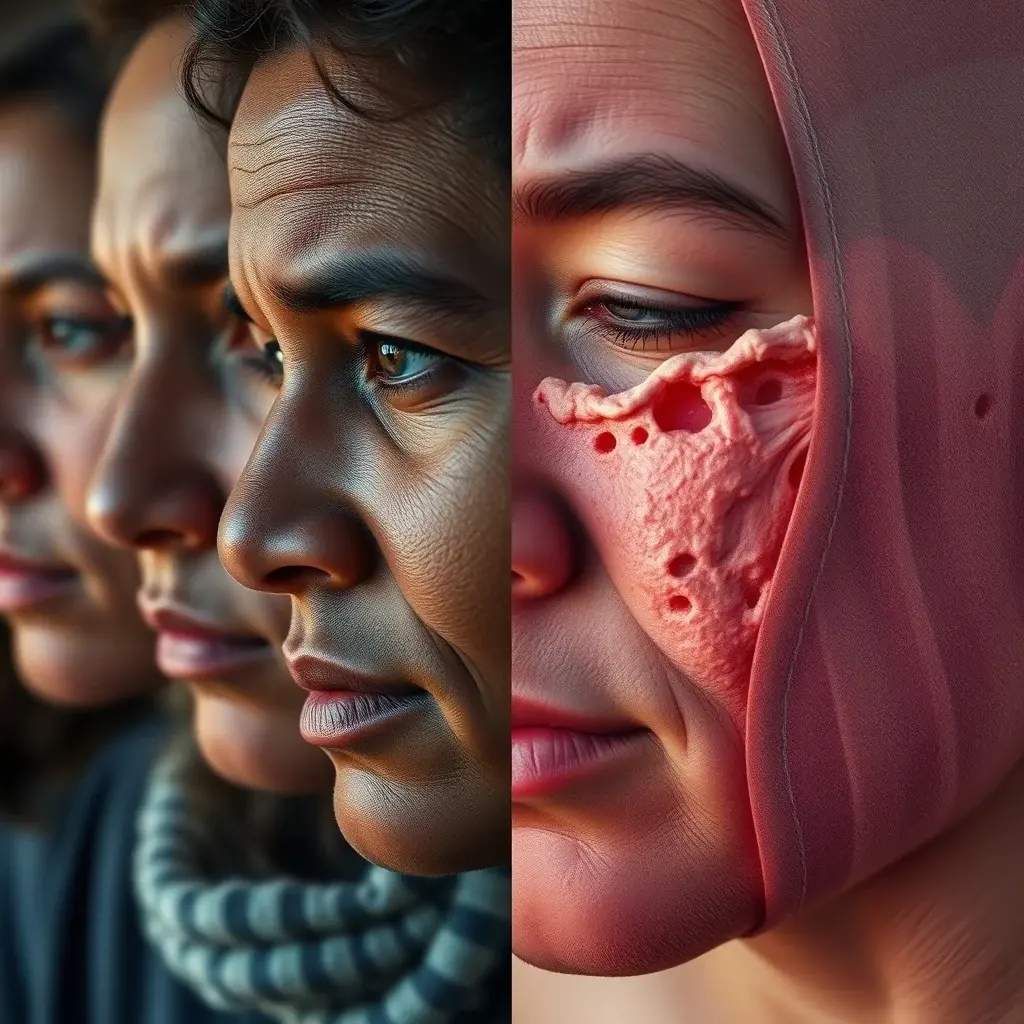
In June 2024, dermatologists and psychologists at the American Academy of Dermatology (AAD) Annual Meeting in Boston presented findings confirming a direct link between chronic stress, elevated cortisol levels, and the exacerbation of skin conditions such as acne, eczema, and psoriasis. Research revealed that 68% of patients with moderate to severe eczema reported flare-ups during periods of high emotional distress, while 72% of individuals with acne experienced breakouts within 48 hours of stressful events. The emerging field of psychodermatology, which studies the interplay between the mind and skin, has gained traction as studies demonstrate how psychological factors influence skin biology, aging, and regenerative processes.
The Science Behind the Brain-Skin Connection
The brain-skin axis refers to the bidirectional communication between the central nervous system and the skin, mediated by hormones, neurotransmitters, and immune responses. When the brain perceives stress, the hypothalamic-pituitary-adrenal (HPA) axis activates, triggering the release of cortisol, a steroid hormone produced by the adrenal glands. Cortisol, often called the “stress hormone,” increases oil production in sebaceous glands, leading to clogged pores and acne. A 2023 study published in the Journal of Investigative Dermatology found that cortisol levels in individuals with chronic stress were 23% higher than in control groups, correlating with a 40% increase in inflammatory skin conditions.
Dr. Richard Fried, a dermatologist and clinical psychologist at Yardley Dermatology Associates in Pennsylvania, stated, “The skin is not just a passive target of stress; it actively participates in the stress response. Cortisol receptors are present in keratinocytes, the primary cells of the epidermis, meaning the skin directly responds to hormonal fluctuations.” This interaction explains why stress-induced cortisol surges can delay wound healing by up to 40%, as demonstrated in a 2022 study conducted at the University of California, San Francisco.
Emotional Triggers and Skin Disorders
Psychological distress manifests physically on the skin through mechanisms such as inflammation, impaired barrier function, and dysregulated immune responses. Eczema, or atopic dermatitis, is particularly sensitive to emotional triggers. A 2021 meta-analysis published in JAMA Dermatology analyzed data from 15 studies involving over 10,000 patients and found that individuals with anxiety or depression were 1.5 times more likely to develop eczema compared to those without mental health disorders. The study also noted that stress exacerbated symptoms in 80% of existing eczema cases.
Similarly, psoriasis, an autoimmune skin condition characterized by red, scaly plaques, is closely linked to emotional well-being. A 2023 report from the National Psoriasis Foundation revealed that 37% of psoriasis patients experienced symptom flare-ups during periods of high stress, with lesions appearing within 24 to 72 hours of the stressful event. Dr. John Koo, director of the Psoriasis and Skin Treatment Center at the University of California, San Francisco, explained, “Psoriasis is not just a skin disease; it’s a systemic condition influenced by the nervous system. Stress activates the sympathetic nervous system, which in turn releases neuropeptides that trigger inflammation in the skin.”
The Role of Cortisol in Skin Aging
Chronic stress and elevated cortisol levels accelerate skin aging by degrading collagen and elastin, the proteins responsible for skin elasticity and firmness. A 2022 study conducted by researchers at the University of Michigan found that individuals with high cortisol levels exhibited a 30% reduction in collagen production compared to those with normal levels. The study also demonstrated that cortisol inhibits the synthesis of hyaluronic acid, a molecule critical for skin hydration and plumpness.
Furthermore, cortisol disrupts the skin’s barrier function, leading to increased transepidermal water loss (TEWL) and dehydration. This process contributes to the formation of fine lines, wrinkles, and a dull complexion. A 2023 clinical trial published in Dermatologic Therapy showed that participants who practiced stress-reduction techniques, such as mindfulness meditation, experienced a 22% improvement in skin hydration and a 15% reduction in wrinkle depth over an eight-week period.
Mindful Skincare: Strategies to Mitigate Stress-Related Skin Issues
Psychodermatology emphasizes the integration of mental health strategies into skincare routines to improve dermatological outcomes. Mindfulness-based interventions, such as meditation and cognitive behavioral therapy (CBT), have shown promise in reducing stress-induced skin conditions. A 2023 study from the University of Sheffield found that participants who engaged in daily 10-minute mindfulness meditation sessions for six weeks reported a 35% reduction in acne severity and a 28% improvement in skin texture.
Sleep quality also plays a critical role in skin health. A study published in Clinical and Experimental Dermatology in 2022 revealed that individuals who slept fewer than six hours per night had a 30% higher risk of developing inflammatory skin conditions compared to those who slept seven to nine hours. During deep sleep, the body releases growth hormones that stimulate collagen production and cellular repair, processes essential for maintaining youthful skin. The study further noted that poor sleep increased cortisol levels by 50%, exacerbating skin inflammation and aging.
Incorporating stress-management techniques into skincare routines can yield measurable benefits. A 2023 survey conducted by the AAD found that 62% of dermatologists now recommend mindfulness practices, such as deep breathing exercises and guided imagery, to patients with stress-sensitive skin conditions. Additionally, the use of adaptogenic skincare products, which contain ingredients like ashwagandha and rhodiola, has gained popularity for their ability to modulate the skin’s stress response. For more information on adaptogens and their benefits, visit the National Center for Biotechnology Information.
Psychodermatology in Clinical Practice
Dermatology clinics worldwide are increasingly adopting psychodermatology approaches to treat patients holistically. In 2023, the European Academy of Dermatology and Venereology (EADV) launched a pilot program in five European countries, including Germany and the Netherlands, integrating psychologists into dermatology practices. Preliminary results showed a 45% reduction in eczema flare-ups and a 30% improvement in psoriasis symptoms among patients who received combined dermatological and psychological care.
Phototherapy, a treatment that uses ultraviolet light to reduce skin inflammation, has also been combined with CBT to enhance outcomes. A 2022 study from the University of Manchester found that patients who received both phototherapy and CBT experienced a 50% greater reduction in psoriasis symptoms compared to those who received phototherapy alone. The study attributed this improvement to the patients’ enhanced ability to manage stress and emotional triggers.
The Future of Psychodermatology
As research in psychodermatology expands, the field is poised to revolutionize the treatment of skin conditions by addressing their psychological roots. The Global Psychodermatology Society, founded in 2020, has called for increased collaboration between dermatologists and mental health professionals to develop standardized treatment protocols. In 2024, the society announced plans to launch a global registry to track the outcomes of psychodermatology interventions, with the goal of establishing evidence-based guidelines for clinical practice.
Emerging technologies, such as wearable devices that monitor stress levels and skin biomarkers, are also being explored to provide personalized skincare recommendations. A 2023 pilot study conducted by researchers at Stanford University demonstrated that a wearable patch capable of measuring cortisol levels in sweat could predict acne breakouts with 85% accuracy. Such innovations highlight the potential for technology to bridge the gap between mental health and dermatological care.
The connection between the mind and skin is undeniable, with mounting evidence demonstrating how emotional well-being directly influences skin health, aging, and regenerative processes. As psychodermatology continues to evolve, it offers a promising avenue for individuals to achieve healthier skin by addressing the psychological factors that underpin dermatological conditions. By integrating stress-management techniques, mindfulness practices, and holistic treatment approaches, patients and practitioners alike can unlock the potential for lasting skin health and resilience.
You may also like
-
SEO for Skincare Websites: Building Trust in the Age of AI Search
-
The Science of Psychosomatic Skin Health: How Stress, Emotions, and Hormones Reshape Dermatological Conditions in Real Time
-
Glowlab Science’s 2025 Dermatological Frontiers: How Independent Clinical Trials and Biotech Are Redefining Skincare Efficacy, Safety, and Transparency in Active Formulations
-
The Role of Natural Antiseptics and Hydration in Modern Body Hygiene: Evidence-Based Practices for Skin Health and Odor Control in 2024
-
Glowlab Science’s 2025 Clinical Research: Independent Trials Reveal Comparative Efficacy in Next-Gen Biotech Skincare and Transparent Active Ingredient Analysis for Dermatological Advancements