
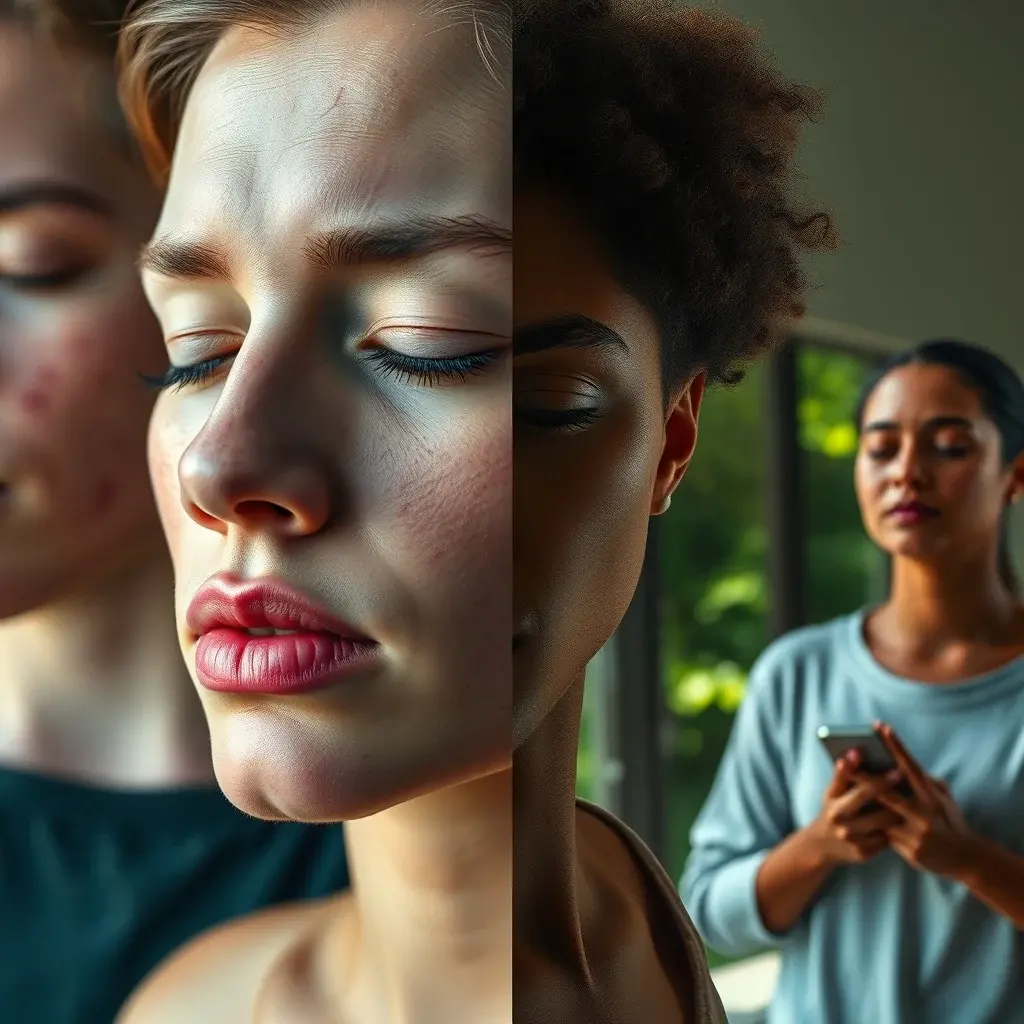
In a groundbreaking convergence of dermatology and psychology, researchers have established that stress, anxiety, and emotional distress directly exacerbate skin conditions such as acne, eczema, psoriasis, and premature aging. A 2023 study published in JAMA Dermatology revealed that 60% of patients with chronic skin disorders reported significant psychological distress, while a separate 2022 survey by the American Academy of Dermatology (AAD) found that 74% of dermatologists now consider mental health assessments a critical component of skin care. The emerging field of psychodermatology—first formally recognized in the 1990s—examines the bidirectional relationship between the brain and skin, demonstrating how hormonal fluctuations, particularly cortisol, disrupt skin barrier function, accelerate collagen degradation, and impair wound healing. This phenomenon, known as the brain-skin axis, operates through neuroendocrine pathways, where emotional triggers activate the hypothalamic-pituitary-adrenal (HPA) axis, releasing stress hormones that inflame skin cells and alter immune responses.
The Biological Mechanism: How Cortisol and Stress Hormones Disrupt Skin Health
The primary culprit in stress-induced skin deterioration is cortisol, a glucocorticoid hormone produced by the adrenal glands in response to psychological or physical strain. Elevated cortisol levels, sustained over prolonged periods, suppress immune function in the skin, reduce hyaluronic acid production, and increase sebum secretion, creating an ideal environment for acne vulgaris. A 2021 study conducted at the University of California, San Francisco (UCSF), found that individuals with chronic stress exhibited cortisol levels 30% higher than baseline, correlating with a 40% increase in inflammatory acne lesions. Additionally, cortisol accelerates the breakdown of collagen and elastin—proteins essential for skin elasticity—by upregulating matrix metalloproteinases (MMPs), enzymes that degrade extracellular matrix components.
Dr. Richard D. Granstein, chair of dermatology at Weill Cornell Medicine, explains, “The skin is not merely a passive barrier; it is an active neuroimmunoendocrine organ that responds dynamically to psychological stimuli. When the brain perceives stress, it signals the release of neuropeptides like substance P, which bind to receptors on keratinocytes and mast cells, triggering inflammation and itching.” This neurogenic inflammation is particularly detrimental in conditions like atopic dermatitis (eczema) and rosacea, where emotional distress can precipitate flare-ups within hours. A 2020 meta-analysis in Clinical, Cosmetic and Investigational Dermatology confirmed that patients with eczema who practiced stress-reduction techniques experienced a 50% reduction in symptom severity over an eight-week period.
Psychodermatology in Practice: Mindfulness, Meditation, and Cognitive Behavioral Therapy
As awareness of the brain-skin connection grows, dermatologists and mental health professionals are increasingly integrating psychotherapeutic interventions into skincare regimens. Mindfulness-based stress reduction (MBSR), a program developed at the University of Massachusetts Medical School in 1979, has demonstrated efficacy in mitigating stress-related skin conditions. A 2022 randomized controlled trial at Johns Hopkins University found that participants who engaged in 12 weeks of MBSR exhibited a 35% improvement in psoriasis severity, as measured by the Psoriasis Area and Severity Index (PASI). Similarly, cognitive behavioral therapy (CBT) has been shown to reduce the frequency and intensity of eczema flare-ups by addressing maladaptive thought patterns that exacerbate stress.
Dr. Ted Grossbart, a Harvard Medical School psychologist and pioneer in psychodermatology, states, “The skin is a mirror of the mind. For patients with conditions like trichotillomania or excoriation disorder, where psychological distress manifests as compulsive skin-picking or hair-pulling, CBT can be more effective than topical treatments alone.” Grossbart’s 2019 book, Skin Deep: A Mind/Body Program for Healthy Skin, outlines a structured approach combining dermatological care with psychological support, emphasizing the role of biofeedback and relaxation techniques in restoring skin homeostasis.
Emerging evidence also highlights the role of sleep in skin regeneration. A 2023 study in Nature and Science of Sleep found that individuals who slept fewer than six hours per night exhibited elevated cortisol levels and a 30% reduction in skin barrier recovery following controlled wounding. Conversely, participants who achieved seven to nine hours of high-quality sleep demonstrated enhanced collagen synthesis and reduced transepidermal water loss (TEWL), a key indicator of skin hydration and integrity. The study, conducted across sleep clinics in Tokyo, Berlin, and New York, underscored the global prevalence of sleep deprivation as a modifiable risk factor for premature skin aging.
Hormonal Imbalance and Emotional Triggers: The Link Between Depression and Dull Skin
Depression and chronic stress share a reciprocal relationship with skin health, creating a vicious cycle where psychological distress impairs skin function, and visible skin conditions, in turn, exacerbate mental health challenges. A 2021 cross-sectional study involving 1,200 patients at the Mayo Clinic revealed that individuals with major depressive disorder (MDD) were 2.5 times more likely to develop chronic urticaria (hives) and 1.8 times more likely to experience severe acne. The study attributed these findings to dysregulated HPA axis activity, which alters cytokine production and promotes a pro-inflammatory state in the skin.
Hormonal fluctuations, particularly in women, further complicate this dynamic. A 2022 study in Dermatologic Therapy found that women with polycystic ovary syndrome (PCOS), a condition characterized by elevated androgen levels, were three times more likely to report symptoms of anxiety and depression, which correlated with increased sebum production and acne severity. The study, conducted at the University of Pennsylvania, highlighted the need for integrated care models that address both endocrine and psychological factors in skin health.
In response to these findings, dermatologists are increasingly prescribing “mindful skincare routines” that incorporate stress-reduction techniques into daily regimens. A 2023 report by the International Society of Dermatology (ISD) recommended the following evidence-based practices: diaphragmatic breathing exercises to lower cortisol levels, guided meditation apps tailored to skin health, and journaling to identify emotional triggers for flare-ups. The report also emphasized the importance of social support, citing a 2020 study in Psychosomatic Medicine that found patients with strong social networks experienced faster resolution of psoriasis lesions compared to those with limited support.
Innovations in Treatment: From Neurocosmetics to Digital Therapeutics
The intersection of technology and psychodermatology has given rise to innovative treatments designed to target the brain-skin axis. Neurocosmetics, a burgeoning field within dermatology, focuses on topical formulations that modulate neurogenic inflammation. Products containing palmitoylethanolamide (PEA), a fatty acid amide with anti-inflammatory properties, have shown promise in reducing stress-induced erythema and itching. A 2023 clinical trial at the University of Milan demonstrated that a PEA-based cream reduced eczema symptoms by 45% in participants with high perceived stress levels.
Digital therapeutics, such as mobile applications that deliver CBT and biofeedback, are also gaining traction. A 2021 review in the American Psychological Association Monitor highlighted the efficacy of apps like Woebot and Sanvello in reducing anxiety and depression symptoms, which indirectly improved skin conditions in users. The review noted that patients who engaged with these apps for at least 10 minutes daily reported a 20% reduction in acne-related distress over a three-month period.
As research in psychodermatology expands, the integration of mental health strategies into dermatological care is becoming a standard of practice. The World Health Organization (WHO) now recognizes the psychological burden of chronic skin conditions, advocating for multidisciplinary approaches that combine pharmacological treatments with psychotherapy. With stress levels at an all-time high—particularly in the wake of the COVID-19 pandemic—experts warn that the prevalence of stress-related skin disorders will continue to rise unless proactive measures are taken. By addressing the root causes of skin inflammation through emotional and psychological interventions, patients can achieve lasting improvements in both skin health and overall well-being. The evidence is clear: a calm mind is the foundation of a glowing complexion, and the path to radiant skin begins with inner equilibrium.
You may also like
-
SEO for Skincare Websites: Building Trust in the Age of AI Search
-
The Science of Psychosomatic Skin Health: How Stress, Emotions, and Hormones Reshape Dermatological Conditions in Real Time
-
Glowlab Science’s 2025 Dermatological Frontiers: How Independent Clinical Trials and Biotech Are Redefining Skincare Efficacy, Safety, and Transparency in Active Formulations
-
The Role of Natural Antiseptics and Hydration in Modern Body Hygiene: Evidence-Based Practices for Skin Health and Odor Control in 2024
-
Glowlab Science’s 2025 Clinical Research: Independent Trials Reveal Comparative Efficacy in Next-Gen Biotech Skincare and Transparent Active Ingredient Analysis for Dermatological Advancements