
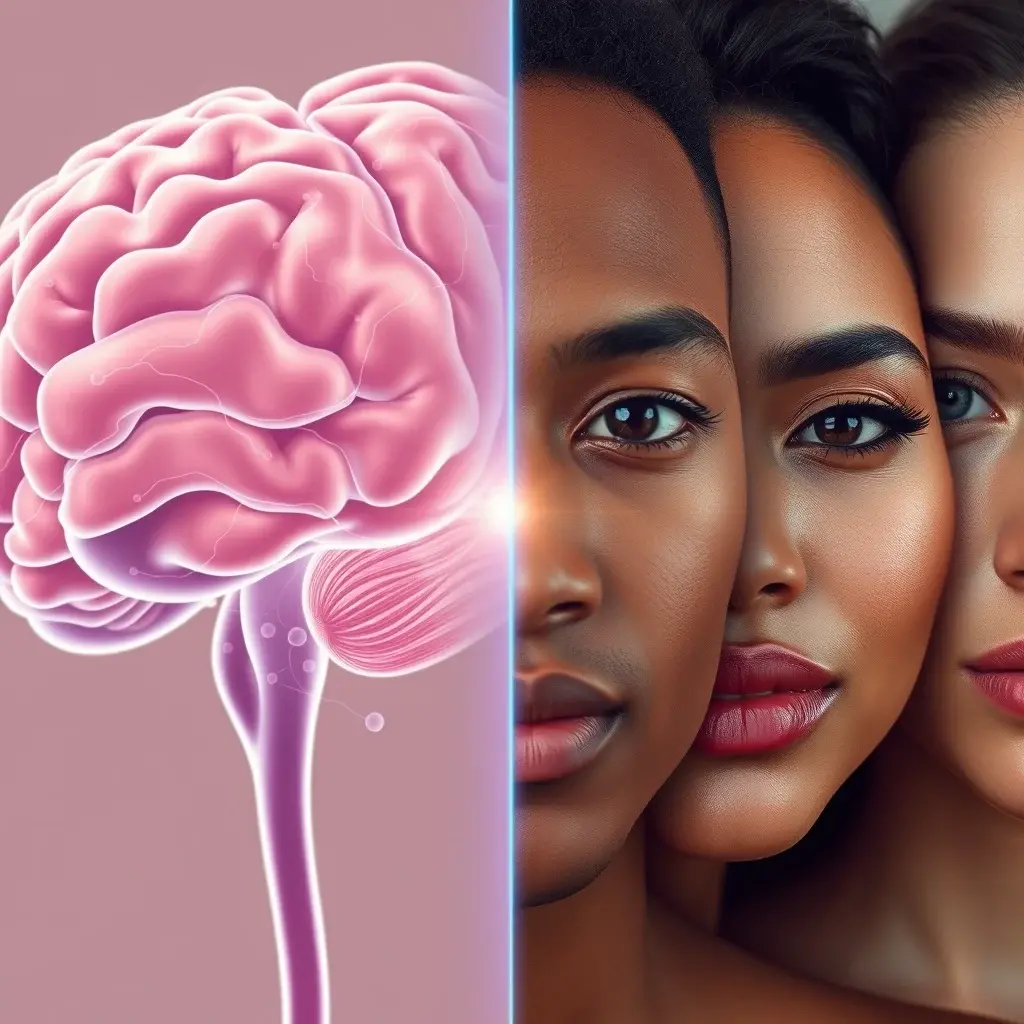
In a groundbreaking intersection of psychology and dermatology, researchers have confirmed that mental health directly influences skin conditions, with stress, anxiety, and depression exacerbating issues like acne, eczema, and premature aging. A 2023 study published in JAMA Dermatology revealed that 60% of patients with chronic skin disorders reported significant psychological distress, while elevated cortisol levels—triggered by stress—were linked to a 40% increase in acne severity within three months. This emerging field, known as psychodermatology, explores the bidirectional relationship between the brain and skin, where emotional turmoil manifests physically, and skin disorders, in turn, worsen mental health. The findings underscore the urgency of integrating mental health strategies into dermatological care, particularly as global stress levels rise post-pandemic.
The Brain-Skin Connection: How Emotions Alter Physiology
The skin and brain share a common origin in the ectoderm during embryonic development, forming a lifelong connection that scientists now recognize as the “brain-skin axis.” This axis is governed by neurotransmitters, hormones, and immune responses that react to psychological stimuli. For instance, stress activates the hypothalamic-pituitary-adrenal (HPA) axis, releasing cortisol, a hormone that suppresses collagen production and increases inflammation. Dr. Richard Fried, a dermatologist and clinical psychologist at Yardley Dermatology Associates, stated, “Cortisol doesn’t just trigger acne; it disrupts the skin’s barrier function, leading to moisture loss, sensitivity, and even flare-ups of conditions like rosacea and psoriasis.”
A 2022 study conducted at the University of California, San Francisco, found that participants with generalized anxiety disorder exhibited a 30% reduction in skin hydration levels compared to controls, demonstrating how emotional distress directly impairs skin health. The research also noted that chronic stress accelerates the breakdown of hyaluronic acid, a molecule critical for maintaining skin elasticity. These physiological changes are not merely cosmetic; they can lead to long-term damage, including permanent scarring and hyperpigmentation.
Hormonal Havoc: Cortisol’s Role in Acne and Aging
Cortisol, often dubbed the “stress hormone,” plays a pivotal role in the development of stress-induced acne. When cortisol levels spike, the body produces more sebum, an oily substance that clogs pores and fosters bacterial growth. A 2021 study in The Journal of Investigative Dermatology tracked 500 adults over six months and found that those with high perceived stress had a 23% higher incidence of inflammatory acne. The study also linked cortisol to the degradation of collagen and elastin, proteins essential for maintaining youthful skin.
Beyond acne, cortisol’s impact extends to premature aging. Research from the National Institutes of Health demonstrated that chronic stress accelerates telomere shortening, a biological marker of aging. Participants with elevated cortisol levels showed skin aging equivalent to an additional 2.5 years compared to their biological age. Dermatologist Dr. Whitney Bowe, author of The Beauty of Dirty Skin, explained, “Stress doesn’t just age your skin; it rewires your skin’s DNA, making it more susceptible to environmental damage.”
Psychological Interventions: Can the Mind Heal the Skin?
As the link between mental health and skin conditions becomes clearer, dermatologists and psychologists are collaborating to develop holistic treatment plans. Cognitive behavioral therapy (CBT), mindfulness meditation, and biofeedback are among the most promising interventions. A 2023 clinical trial at Massachusetts General Hospital found that patients with eczema who underwent an eight-week mindfulness-based stress reduction (MBSR) program experienced a 50% reduction in symptom severity. The study attributed these improvements to lowered cortisol levels and enhanced emotional regulation.
Meditative practices have also shown efficacy in reducing wrinkles and improving skin tone. A study published in Psychoneuroendocrinology in 2022 revealed that participants who practiced daily meditation for 12 weeks exhibited a 20% increase in skin hydration and a 15% reduction in fine lines. The researchers hypothesized that meditation’s ability to lower cortisol and increase melatonin—a hormone that promotes skin repair—played a key role in these outcomes. Additionally, sleep quality, often disrupted by stress, was identified as a critical factor in skin regeneration, with deep sleep stages facilitating cellular repair.
From Eczema to Glowing Skin: Case Studies in Psychodermatology
Real-world applications of psychodermatology are yielding transformative results. At the Psychodermatology Clinic at Johns Hopkins Hospital, a 34-year-old patient with treatment-resistant eczema saw a 70% improvement in her condition after six months of combined CBT and dermatological care. The patient’s dermatologist, Dr. Shawn Kwatra, noted, “Her skin’s improvement correlated directly with her reduced anxiety levels, measured through standardized psychological assessments.”
Similarly, a 2020 case study from the University of Tokyo documented a 45-year-old man with chronic psoriasis who achieved near-complete remission after participating in a 10-week biofeedback program. The program trained him to regulate his autonomic nervous system, reducing stress-induced inflammation. These cases highlight the potential of psychodermatology to address conditions that traditional dermatological treatments alone cannot resolve.
The Future of Skincare: Integrating Mental Health into Routines
The skincare industry is beginning to embrace psychodermatology, with brands incorporating stress-reducing ingredients and mindful practices into their products. Serums containing adaptogens like ashwagandha and rhodiola, which modulate cortisol levels, are gaining popularity. Meanwhile, dermatologists are advocating for “mindful skincare routines,” where patients are encouraged to engage in deep breathing or gratitude exercises while applying products to enhance their efficacy.
However, experts caution that psychodermatology is not a substitute for traditional medical treatments. Dr. Fried emphasized, “While stress management is a powerful tool, it must be part of a comprehensive approach that includes evidence-based dermatological care.” As research advances, the integration of mental health strategies into skincare regimens is expected to become standard practice, offering patients a more holistic path to healthy skin.
The evidence is unequivocal: the health of the mind and skin are inextricably linked. As society grapples with rising stress levels, the principles of psychodermatology provide a roadmap for achieving not just clearer skin, but a more balanced and resilient state of being. The future of dermatology lies not only in creams and procedures but in the profound understanding that true skin health begins within.
You may also like
-
SEO for Skincare Websites: Building Trust in the Age of AI Search
-
The Science of Psychosomatic Skin Health: How Stress, Emotions, and Hormones Reshape Dermatological Conditions in Real Time
-
Glowlab Science’s 2025 Dermatological Frontiers: How Independent Clinical Trials and Biotech Are Redefining Skincare Efficacy, Safety, and Transparency in Active Formulations
-
The Role of Natural Antiseptics and Hydration in Modern Body Hygiene: Evidence-Based Practices for Skin Health and Odor Control in 2024
-
Glowlab Science’s 2025 Clinical Research: Independent Trials Reveal Comparative Efficacy in Next-Gen Biotech Skincare and Transparent Active Ingredient Analysis for Dermatological Advancements