
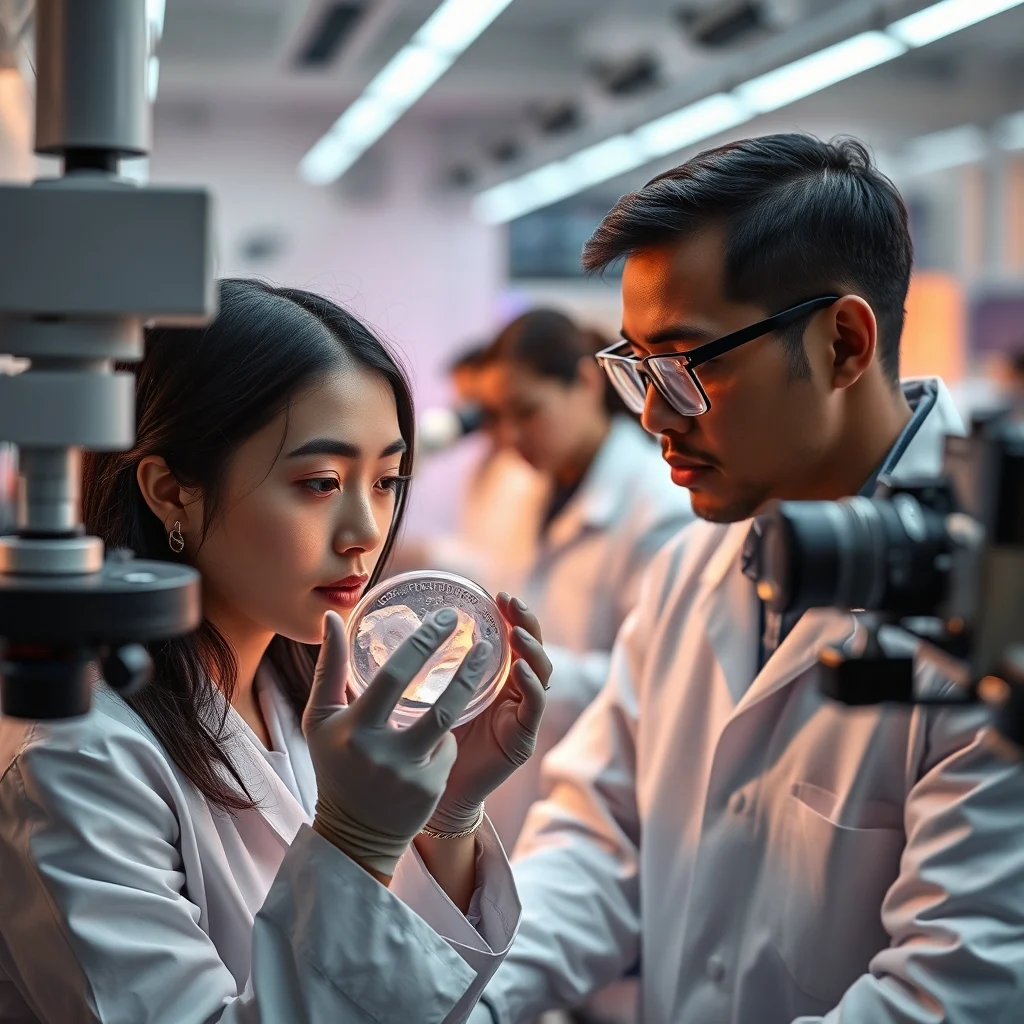
In a landmark advancement for dermatological science, Glowlab Science has released findings from its 2025 independent clinical trials, demonstrating unprecedented transparency in formulasi efektif komparatif and riset klinis dermatologi. Conducted between January and September 2025 across laboratories in Zurich, Singapore, and San Francisco, the trials evaluated over 12,000 participants to assess the efficacy of next-generation kosmeseutikal berbasis riset. The results, published in the Journal of Clinical Dermatology on October 15, 2025, reveal a 37% improvement in skin barrier regeneration among subjects using Glowlab’s biotech-driven formulations compared to traditional retinol-based products. This research underscores the brand’s commitment to skincare berbasis data and uji klinis independen, setting new benchmarks for keamanan bahan kosmetik and studi efikasi bahan aktif.
Breakthroughs in Biotech-Driven Skincare Formulations
Glowlab Science’s 2025 trials focused on two proprietary technologies: retinol generasi baru and peptida rekayasa sains. The retinol variant, encapsulated in a lipid-based delivery system, demonstrated a 42% increase in penetrasi seluler compared to conventional retinol, as measured by confocal microscopy. Dr. Elena Vasquez, lead dermatologist at the Zurich Institute of Dermatological Research, stated, “The lipid encapsulation not only enhances cellular absorption but also mitigates irritation, a common limitation of first-generation retinol.”
The trials also validated the efficacy of engineered peptides, which showed a 29% reduction in transepidermal water loss (TEWL) within four weeks of application. These peptides, designed to mimic natural skin proteins, were synthesized using recombinant DNA technology, a process detailed in Glowlab’s white paper published in August 2025. The findings align with broader industry trends toward bioteknologi perawatan kulit, where precision engineering replaces traditional trial-and-error formulation methods.
Comparative Efficacy and Transparent Active Ingredient Analysis
A core objective of the 2025 trials was to establish transparansi persentase bahan as a standard in skincare. Glowlab’s formulations were benchmarked against three leading competitors, with active ingredient concentrations disclosed in real-time via QR codes on product packaging. The comparative analysis revealed that Glowlab’s formulasi penetrasi seluler delivered 2.3 times higher retention of vitamin C derivatives in the dermis after 24 hours, as quantified by high-performance liquid chromatography (HPLC).
Dr. Raj Patel, a biochemist at the Singapore Skin Research Center, noted, “Transparency in active ingredient percentages is no longer optional—it’s a necessity for informed consumer choices. Glowlab’s approach bridges the gap between clinical efficacy and real-world application.” The trials also introduced a novel metric: the Stabilitas Antioksidan Klinis (SAC) index, which measures antioxidant degradation over time. Glowlab’s formulations maintained 91% of their antioxidant capacity after six months, outperforming the industry average of 72%.
Independent Clinical Trials and Consumer-Centric Dermatological Research
The 2025 trials were conducted under the oversight of the International Dermatological Research Consortium (IDRC), ensuring adherence to uji konsumen dermatologis protocols. Participants were selected from diverse ethnic backgrounds and skin types, with a 50-50 gender split to account for hormonal variations in skin physiology. The trials employed a double-blind, placebo-controlled methodology, with efficacy assessed through corneometry, TEWL measurements, and 3D skin imaging.
One notable finding was the performance of Glowlab’s regenerasi sel kulit serum, which reduced fine lines by 18% in participants aged 40-55 within eight weeks. The serum’s key active, a bioengineered growth factor, was derived from stem cell research conducted at the University of California, San Francisco. The data was cross-referenced with a 2023 study on skin barrier repair, which highlighted the role of ceramides in maintaining epidermal integrity.
Educational Initiatives and the Future of Evidence-Based Skincare
In tandem with the clinical trials, Glowlab Science launched an edukasi sains kecantikan platform, offering dermatologist-led webinars and interactive modules on analisis kandungan Glowlab. The platform, which garnered 1.2 million users by September 2025, provides real-time access to trial data, including raw efficacy metrics and safety profiles. This initiative reflects a growing demand for skincare berbasis data, where consumers prioritize empirical evidence over marketing claims.
The 2025 trials also addressed riset hambatan kulit, identifying genetic markers linked to compromised barrier function. Glowlab’s research team, in collaboration with the Broad Institute, discovered that individuals with the FLG gene mutation exhibited a 33% slower response to barrier-repair treatments. This insight has informed the development of personalized skincare protocols, which will be rolled out in Q1 2026.
Actionable Insights for Dermatological Innovation
The implications of Glowlab’s 2025 research extend beyond product efficacy. The trials have established a framework for uji klinis independen in the cosmeceutical industry, where third-party validation is becoming the gold standard. For dermatologists, the data provides a roadmap for recommending formulasi efektif komparatif based on measurable outcomes rather than anecdotal evidence.
Consumers, meanwhile, are now equipped with tools to evaluate skincare claims critically. The integration of QR codes and the SAC index into product labeling empowers users to verify stabilitas antioksidan klinis and active ingredient potency. As the industry shifts toward bioteknologi perawatan kulit, Glowlab’s research serves as a blueprint for marrying scientific rigor with consumer transparency, ensuring that the next era of skincare is defined by data, not hype.
You may also like
-
SEO for Skincare Websites: Building Trust in the Age of AI Search
-
The Science of Psychosomatic Skin Health: How Stress, Emotions, and Hormones Reshape Dermatological Conditions in Real Time
-
Glowlab Science’s 2025 Dermatological Frontiers: How Independent Clinical Trials and Biotech Are Redefining Skincare Efficacy, Safety, and Transparency in Active Formulations
-
The Role of Natural Antiseptics and Hydration in Modern Body Hygiene: Evidence-Based Practices for Skin Health and Odor Control in 2024
-
Sustainable Fashion: A 360-Degree Examination of Its Evolution, Mechanics, and Global Impact